Number Lookup API: What to Check Before Customer Messages Are Sent

Content authorBy Claire ConnorPublished onReading time13 min read
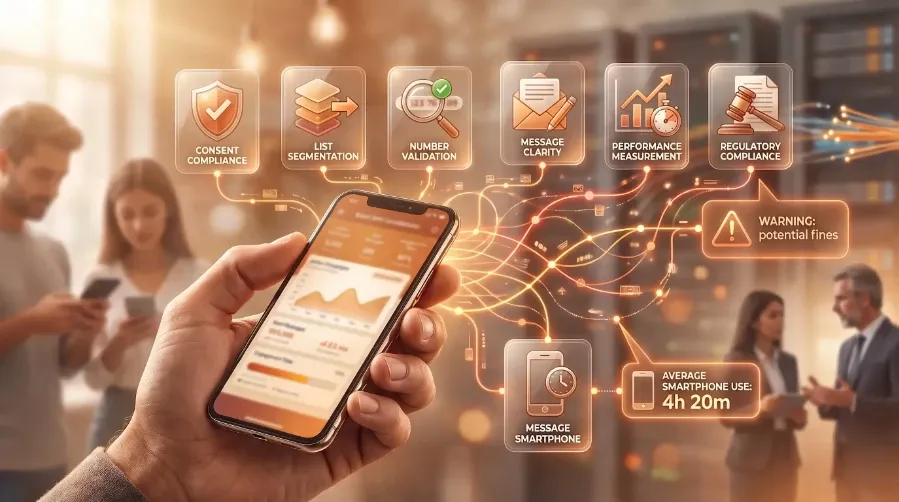
A lifelike hand holds a glossy smartphone displaying a detailed workflow app UI, illuminated by warm natural lighting against a soft bokeh background.

Number lookup API works as a pre-send decision step inside your messaging pipeline. In this article, we walk you through what a lookup actually checks and where the call belongs in the workflows you already run.

Why sending blind costs you

You already send SMS at volume, and a number lookup API is the step most teams skip until the failures pile up. A message goes to a number that was disconnected six months ago. Another lands on a landline that can't receive text. A third hits a number a customer mistyped at signup, and you never hear about it until a support ticket asks why the password reset code never came. None of these failures announce themselves before the send. You find out after, when the damage is already done.

The damage is real money. The FCC found that roughly 35 million telephone numbers are disconnected and made available for reassignment each year in the US alone, and a slice of those sit in your contact tables right now. Every message you send to one of them is spend you don't recover. With North American carriers charging real per-message fees, a send list with a 20% bad-number rate burns one dollar in five before a single customer reads anything.

The cost goes deeper than wasted spend. Carriers watch how your traffic behaves, and a high rate of failed or undeliverable sends tells them your list is dirty. That hurts your sender reputation, which means even your good messages start landing late or not at all.

Most teams handle this in one of two ways. They check that a number looks correctly formatted, or they do nothing and let the send fail. Both leave the same gap. Format tells you a number is shaped right. It says nothing about whether the number is alive or who owns it now. The missing step is customer number intelligence gathered by a number lookup API before the message leaves your system.

Number lookup vs validation

Validation and lookup get used as if they mean the same thing. They don't, and the difference decides how many of your messages actually arrive.

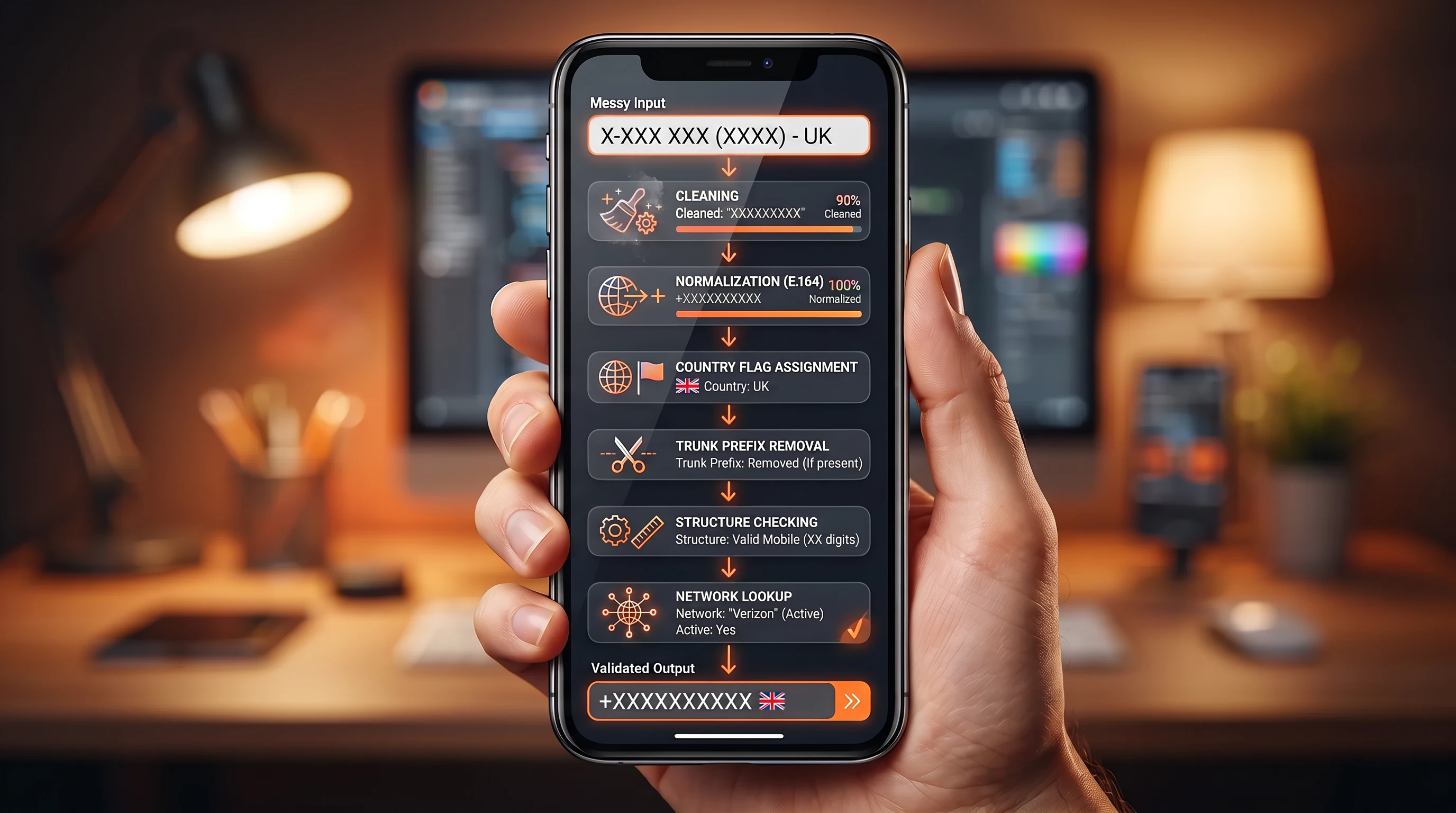
Validation confirms a number is correctly formatted and theoretically dialable. It checks that the digits match a known pattern for a country and that the number falls inside an allocated range. A validation pass is a structural check. It answers one question: could this number exist?

A number lookup API goes further. It queries live carrier and network data to tell you what the number actually is right now. It checks the number's live status and the network details that determine reachability at the other end. That's pre-send decisioning in its truest form: you decide based on the number's real-world status.

Here is why the gap matters. A number can pass validation and still be a dead send. A perfectly formatted mobile number that was disconnected last quarter passes every format check you throw at it. So does a landline, which has a valid structure but cannot receive an SMS at all. Format validation waves both through. The lookup catches them because it reads the network.

So the practical consequence is clean. Validation tells you a number could work. A lookup tells you whether it will. If your only check is format, you are sending on hope, and the failures arrive after the spend.

What a number lookup API returns

A number lookup API response is only useful if you know what each field means for the decision in front of you. The data breaks into groups for pre-send decisioning, and each one maps to a send-or-skip choice you can wire into your logic. Walk through them one at a time.

BlockNote image

Line type and carrier

A number lookup API reveals the line type and which carrier or network operator holds it. This matters because line type decides whether an SMS has any chance of landing. Send a text to a landline and it fails by definition, since the line can't receive one. That's a send you should skip or reroute to voice. VoIP numbers carry their own weight: it shows up in fraudulent signups more than mobile does. Carrier data feeds your routing, because reaching a number on the right network path changes whether the message gets through. The choice is concrete. Mobile, send. Landline, skip the SMS. VoIP, decide based on your risk tolerance.

Validate every number. Deliver every message.

Talk to our team about real-time phone number validation, fraud prevention, and high-deliverability SMS for your business.

Active or disconnected status

Reachability tells you whether a number is currently live or disconnected. This is the single highest-value check you can run, because it protects deliverability and stops wasted spend at the same time. A number that came back active gets your message. A disconnected one gets suppressed before it costs you anything.

There's a distinction worth setting expectations on. Some signals are hard, drawn straight from a live network query against the carrier's Home Location Register, the database that knows whether a SIM is currently registered. Others are probabilistic, inferred from patterns and last-known states. A hard signal tells you the number is registered on a network at the moment you ask. A probabilistic one tells you the number is likely reachable based on what the data last knew. Treat them differently in your logic. Hard signals can gate a send outright. Probabilistic ones work better as a score that shifts priority, so you avoid suppressing a good number on a guess.

Ported and roaming signals

Numbers move. Customers switch carriers and keep their number, and more than 38 million phone numbers have been ported in the US. A number lookup API can flag a number's porting history and its current roaming state, both of which a simple format check has no way of knowing.

This is the detail most teams don't realize a lookup provides. If your records assume a number still sits with the carrier it was issued under, your routing is working off a stale assumption, and stale routing costs money and delivery. A number ported from one operator to another needs to be routed to where it lives now. Roaming state matters for the same reason: a number traveling on a foreign network changes how a message is delivered and what it costs. Porting and roaming data keep your routing accurate, which keeps your delivery rates and your per-message costs honest.

Customer number intelligence signals

The individual fields are useful on their own, but their real value shows up when you read them together. That combined, decision-ready picture of a contact's number is customer number intelligence, and it's the difference between knowing isolated facts and making a clean send decision.

Here's how it works in practice. A number comes back as active, mobile, on a known carrier, with no recent porting churn. That's a high-reachability contact, and it goes to the front of the send queue. Another comes back as VoIP, recently ported, with a probabilistic status that's anything but confident. That contact gets a lower reachability score, and depending on the message you either route it differently or hold it. Customer number intelligence is the practice of scoring reachability from these signals so you can prioritize the contacts worth reaching and suppress the ones that will only cost you.

The business decision this drives is straightforward. You treat every number in your table according to its evidence. Each send becomes a ranked choice, where customer number intelligence tells you who to reach first and who to leave alone until the data improves. That's the shift from sending blind to sending on evidence, and it's where pre-send decisioning earns its place in the pipeline.

These signals come together into a few combined judgments worth scoring:

  • Reachability: is the line active, and is it a type that can receive your message?

  • Routing accuracy: does the carrier and porting data point your send to the right network?

  • Risk: do the line type and roaming signals suggest a number worth extra scrutiny before you send anything sensitive?

Read together, those three judgments are the core of customer number intelligence, and they turn raw fields into a decision your system can act on without a human in the loop.

Validate every number. Deliver every message.

Talk to our team about real-time phone number validation, fraud prevention, and high-deliverability SMS for your business.

Reading the API response

If you're the one wiring this call, the shape of the response decides how much you can automate. A clean, predictable response model lets you build real logic on top of it. A messy one forces you to hard-code exceptions, so plan for the structure before you plan the integration.

A typical number lookup API response is a structured object with the number in E.164 format and the requested data packages; each package also has an error field that can fail independently. Design your parser to expect partial objects, because a lookup can succeed on line type and fail on reachability in the same call.

Confidence and status codes are where the automation logic lives. A hard active status can gate a send directly. A probabilistic score belongs in a pre-send decisioning threshold, where you decide what level of confidence is enough to send and what level pushes the contact into a hold or a slower channel. Treat the probabilistic fields as inputs to a score, and let that score make the send-or-suppress call.

Latency is the constraint that shapes everything when the lookup runs inline. A synchronous pre-send call adds round-trip time to every message, so a lookup that runs in tens of milliseconds is workable inside a send flow, while one that takes seconds is not. Set a tight timeout and decide in advance what happens when you hit it.

That decision is the one engineers get wrong most often. A number lookup API step that blocks the send when the API times out makes your transactional messages fail on infrastructure. Build the fallback first. When a lookup times out or returns an ambiguous result, default to sending for high-priority transactional messages like one-time passcodes, where a delayed code is the worse outcome. For low-priority marketing traffic, you can afford to suppress on a failed or uncertain lookup, because a skipped promotion costs nothing. Treat ambiguous and partial results as their own branch in the logic.

Adding lookup to your workflow

A number lookup API call belongs at one of three points in the systems you already run, and the right point depends on what you're protecting. The trigger patterns are these:

  1. At signup or contact capture, when a number first enters your system.

  2. On a scheduled refresh of stored numbers, sweeping your existing database on a cadence.

  3. Inline, right before a send, as a synchronous check on the number you're about to message.

Checking once at capture is the cheapest option, because you run a single lookup per contact and store the result. It catches mistyped and invalid numbers at the door, before they ever pollute your database. The weakness is freshness. A number that was active at signup can disconnect or port a year later, and your stored result won't know. Capture-time checks keep bad data out, but they go stale.

Checking pre-send is the freshest option, because you read the number's status at the moment it matters. It costs more, since you run a lookup on every send, and it adds latency to the send path. The tradeoff is accuracy. For a one-time passcode or a fraud alert, that freshness is worth the cost, because a failed delivery defeats the entire purpose of the message.

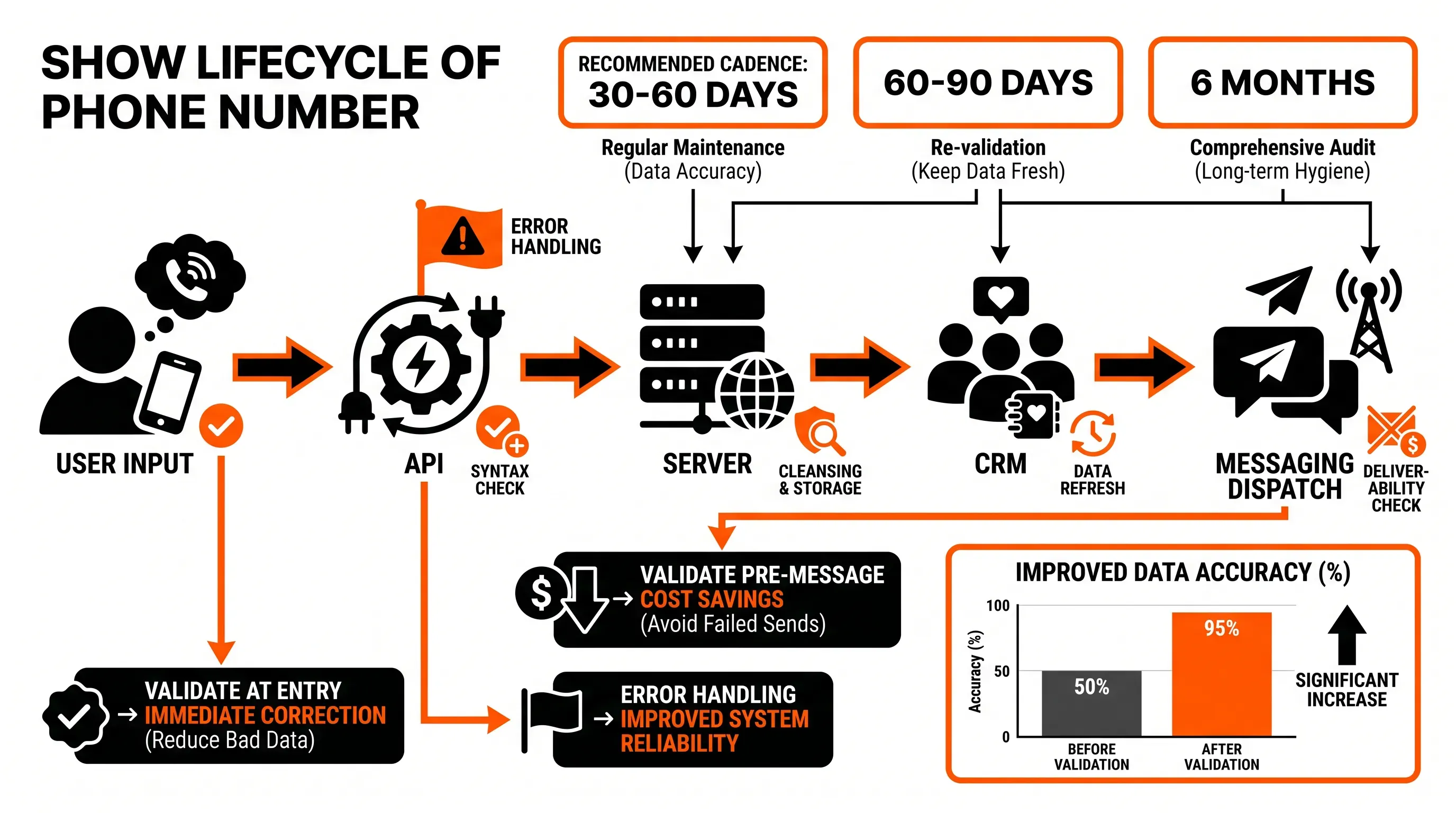
Match the trigger to the use case. For transactional alerts where delivery is critical, lean toward a pre-send check on the live status. For marketing campaigns sent to large lists, a scheduled refresh before the campaign builds keeps your spend down while catching the numbers that died since the last sweep. For CRM hygiene, a periodic refresh keeps stored records trustworthy without a per-send cost. The same customer number intelligence feeds all three, but where you trigger the lookup decides how fresh and how expensive that intelligence is.

The validate-before-you-send model with a number lookup API

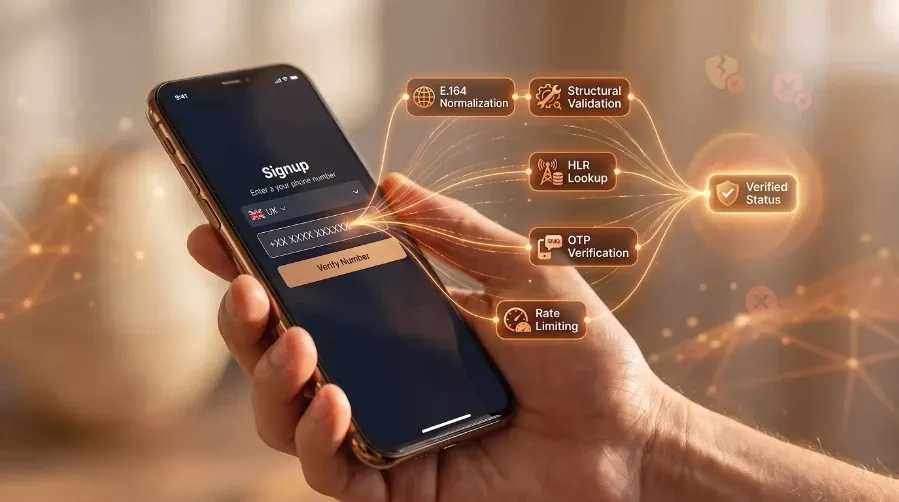
Pull the pieces together and a single operating model emerges. Start with format validation and use the live lookup to decide what happens to the send. That sequence is the whole argument of this article, and it's worth running in that order for a reason.

Format validation comes first because it's cheap and it filters the obvious failures before you spend a lookup on them. A malformed number doesn't need a carrier query to tell you it's broken. Once a number clears format, the number lookup API turns line type and reachability into the customer number intelligence that drives the decision. Then you act: send to the reachable mobile numbers and suppress the disconnected ones before they cost you. That final step is pre-send decisioning, and it's the point of the whole sequence.

This layered approach pays off in three ways that compound over time:

  • Deliverability holds up, because you stop feeding carriers the failed sends that drag down your sender reputation.

  • Cost stays controlled, because every suppressed dead number is spend you keep. On an A2P SMS market valued at USD 74.8 billion in 2025, the per-message economics reward anyone who stops paying to message numbers that can't receive.

  • Contact data gets cleaner as a byproduct. Every pre-send lookup updates what you know about a number, so your database improves on its own with each send.

The mindset shift is the part that matters most. A number lookup API is a repeatable pre-send decision pattern that runs on every message, so the question becomes "is this number worth this send right now?" Answer that question every time, and the cleanup takes care of itself. Pre-send decisioning is the operating model, and customer number intelligence is the data that powers it.

Where to go from here

You now have what you need to decide whether a lookup step belongs in your messaging flow. The question is simple: are your failed sends and support tickets costing you more than a lookup would? If they are, the payoff is concrete. Fewer failed sends and reachability you can trust before a message ever leaves your system.

Acudo has provided phone number intelligence since 2005 and checks whether numbers are real and reachable before your budget gets spent on them. If your team is ready to act, speak to Acudo about adding a number lookup API to your customer communication workflows.

Validate every number. Deliver every message.

Talk to our team about real-time phone number validation, fraud prevention, and high-deliverability SMS for your business.

Store the normalized number, lookup timestamp, line type, reachability status, carrier, source, confidence level and decision taken. Keep the raw response only if your privacy policy and retention rules allow it. A timestamp matters because number status changes after porting, disconnection, or reassignment.

Refresh high-value contact numbers before each transactional send or before time-sensitive campaigns. For CRM hygiene, use a fixed cadence based on message volume and failure rates, then shorten it when disconnect rates rise. Speak to Acudo about mobile validation workflows if you need help setting a refresh policy.

No, a lookup can't prove SMS consent. It confirms technical facts about a phone number, such as line type and reachability. Consent needs its own record that shows the opt-in source and the message category the user agreed to receive.

No, don't block every uncertain result. Use message priority to decide the next step. Send one-time passcodes when the cost of delay is higher than the lookup risk, but hold low-priority marketing traffic until a later refresh or another channel is available.

Test a number lookup api with a 500-number sample that includes active mobile numbers and known bad records. Compare lookup decisions against delivery receipts and failed-send codes. Use that evidence to set thresholds before you place the lookup call in the live send path.

Get in touch

Talk to our team about phone number validation, fraud prevention, and reliable SMS communications.

You Might Also Like

Discover more insights and articles

A human hand holds a glossy smartphone, showcasing a contact list transforming from messy to clean entries against a warm bokeh background.

Customer Phone Number Cleansing for Better SMS Campaign Readiness

This article explains customer database cleansing and shows how a practical pre-send cleanse protects SMS delivery and budget before a large campaign or seasonal peak.

A hand holds a glossy smartphone displaying a dynamic CRM interface, surrounded by organized contact nodes and metrics in a warm office setting.

Customer Data Cleansing: Keep Contact Records Accurate Before You Message

This article treats customer data cleansing as an ongoing maintenance cycle that explains contact record decay and builds a repeatable routine around its costs so your messages keep reaching real people.

A realistic tech scene featuring a smartphone displaying an SMS campaign dashboard, with glowing validation nodes and a CRM contact list overlay.

CRM Phone Data Quality: Why Customer Phone Numbers Matter Before You Send

This article explains why CRM data quality shows up first in the phone number field and how that quiet decay drags down your SMS results. It also explains what to do about it. You will finish able to diagnose whether your own contact data is costing you reach and money through weaker delivery, and to make the case for fixing it.

A realistic hand holds a smartphone, surrounded by warm bokeh, with data icons streaming in and glowing contact nodes on the side.

Customer Phone Data Cleaning for More Reliable SMS Communication

This article explains why customer data cleaning is the real fix behind reliable SMS for order alerts and delivery updates. It walks through the data faults that make contact records go stale and break message delivery, then shows what a practical pre-send validation process looks like for ecommerce and operations teams.

Get in touch

Talk to our experts about validating phone numbers and delivering business-critical SMS with reliability and speed.

Close